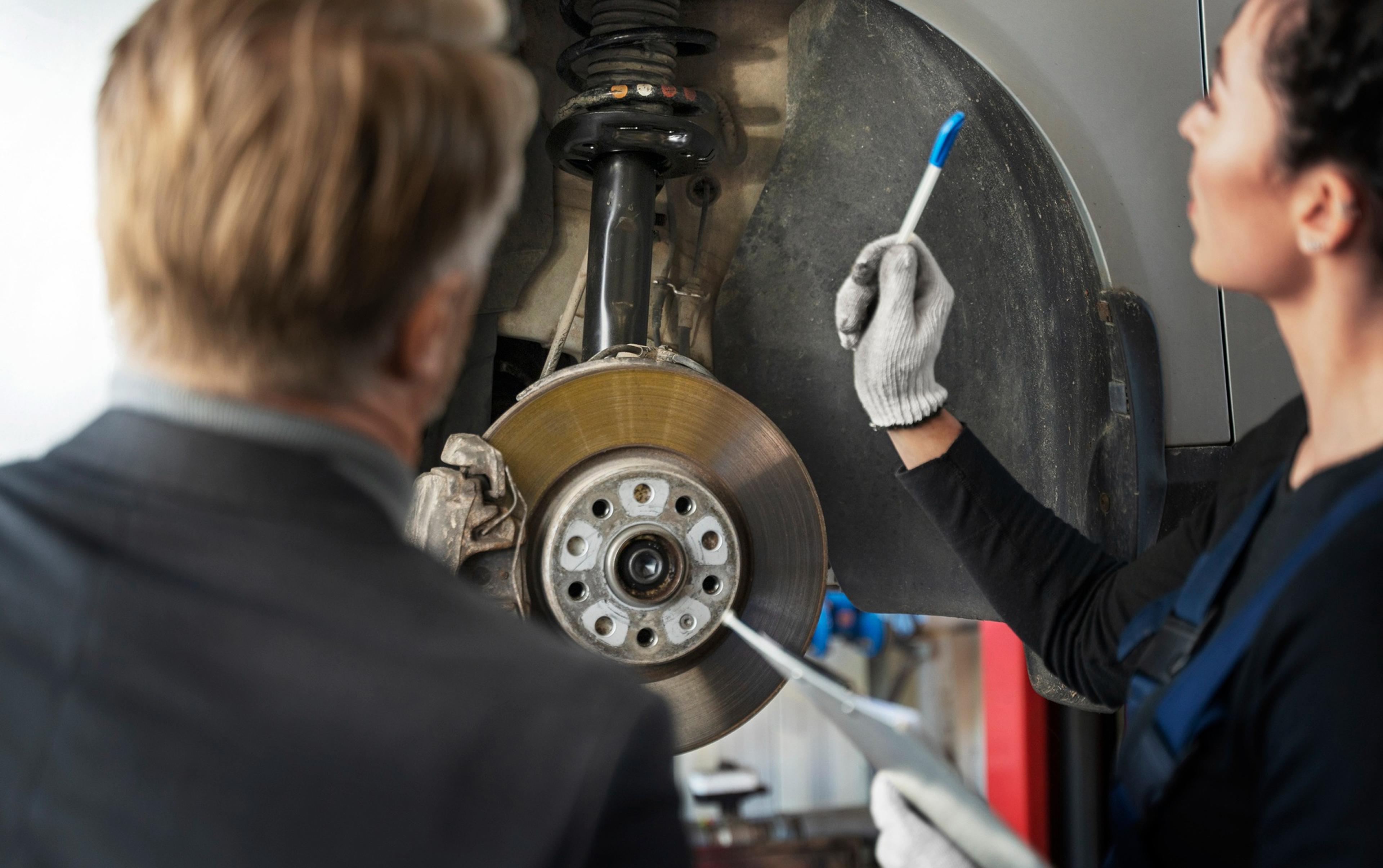
Influence of brake pads
Brake pads are a fundamental component of modern braking systems and are an integral part of the disc brake system. They perform a safety-related task: through controlled friction, they generate the deceleration that reliably slows down a vehicle or brings it to a complete stop. The brake pads are in direct contact with the brake disc and convert the vehicle's kinetic energy into heat.
Brake pads are much more than simple wear parts; they have a decisive influence on the overall braking performance of a vehicle. How sensitively a braking system responds, how reliably a vehicle comes to a standstill, and how stable it behaves at the limits depends largely on the friction material of the pads. High-quality brake pads ensure that the driver has a consistent pedal feel. The response is predictable, the pressure point remains stable, and deceleration is smooth, without jerking or vibration.
Safety
This harmonious interaction is particularly important in modern disc brakes. Electronic systems such as ABS, ESP, or brake assist can only intervene precisely if the friction coefficient of the brake pads remains constant. Even minor irregularities, such as uneven wear or thermal damage, influence the control processes of the electronics and thus the overall driving behavior. An imprecise response or squeaking brake pads can further unsettle the driver.
In practice, brake pads must perform reliably under a wide range of conditions, including wet, cold, and hot weather, in city traffic, and at higher speeds. At the same time, drivers expect consistent response, low noise, and a stable pedal feel. All these requirements come together in a comparatively small component.
Brake pad components
Backing plate
The backing plate forms the foundation of modern brake pads and ensures that all other layers can work precisely and safely. It is almost always made of high-strength steel or metal composite materials that remain dimensionally stable even at the extreme temperatures generated during braking. Its most important task is to reliably fix the pad in the caliper of the disc brakes. Only if the backing plate is manufactured to be absolutely dimensionally accurate will the pads lie flat and work evenly. Even the slightest deviations or corrosion can cause vibrations or lead to squeaking brake pads.
In addition, the backing plate supports heat dissipation and prevents thermal stress from overheating the friction material. It thus plays a key role in ensuring that the brake system remains controllable at all times.
Friction material
The friction material is the crucial layer of the brake pads, because this is where the actual braking effect occurs. It consists of a precisely balanced mixture of fibers, metal components, ceramic particles, resins, and friction modifiers. This combination determines how stable the friction coefficient is, how the pads behave when heated, and how much wear they cause on the brake discs.
Modern compounds have to meet numerous requirements. They should work reliably even when the system is hot or wet, operate as quietly as possible, and generate little dust. If the friction material wears unevenly or hardens, this can lead to longer braking distances or annoying noises, which is a common reason why drivers have to have their brake pads replaced.
The friction layer is therefore not only a component of the brake pad, but also the key factor in determining how precisely and safely a disc brake decelerates.
Adhesive layer
The adhesive layer, often referred to as the bonding layer, permanently bonds the friction material to the backing plate. It consists of high-temperature-resistant industrial resins that can withstand temperatures well above 300 °C while also resisting enormous pressure forces.
When braking, forces are exerted for a short time that can reach many times the weight of the vehicle. These forces are transmitted entirely via the adhesive layer. Failure of this bond would result in immediate loss of function, which is why it is one of the most safety-critical areas of a brake pad. Chemical stresses such as moisture, salt, and brake dust must not impair the bond either.
Thanks to its high resistance and precise manufacturing, the adhesive layer ensures that the pads work reliably even under continuous stress – an important factor for consistent braking force and short braking distances.
Damping plate
On the back of modern brake pads is the so-called damping plate, often referred to as a shim or anti-squeal plate. It consists of multiple layers of metal or rubber composite layers that specifically reduce vibrations and high-frequency noises. Without this component, many disc brakes would vibrate much more frequently or brake pads would squeak, especially at low speeds or with light braking force. The damping plate decouples the pad from the caliper, prevents resonance, and noticeably improves braking comfort in the interior. At the same time, it contributes to more even power transmission by damping micro-vibrations that can affect the frictional contact between the pad and the disc. This means that the damper plate is not only a comfort feature, but also a technically relevant component that makes the braking feel more stable, quieter, and easier to control.

Other components
Intermediate layer
The intermediate layer is located between the friction material and the backing plate and is usually made of rubber-like or fiber-reinforced materials. It absorbs vibrations, reduces noise, and stabilizes the temperature behavior during braking. Particularly in disc brakes, it helps to dampen vibrations and prevent brake pads from squeaking. At the same time, it protects the friction material from sudden heat exposure, ensuring more consistent braking performance.
Wear indicator
The wear indicator, whether mechanical or electronic, shows when the brake pads need to be replaced. Mechanical systems produce a warning squeal when a small metal tab touches the brake disc. Electronic sensors continuously monitor the pad thickness and display a warning message in the cockpit. Both variants ensure that the driver recognizes in good time when the braking performance is declining and replacement is inevitable.
Protective or top layer
The top layer is an extremely thin, thermally treated surface on the friction material. It facilitates the rapid bedding-in of new brake pads and immediately ensures stable initial braking force. In modern disc brakes, it supports uniform friction coefficient development and protects the pad during the sensitive running-in phase. This allows the brake pad to reach its optimum performance more quickly.
Grooves in the friction material
Grooves are narrow slits in the friction material that dissipate heat, dust, and gases. During heavy braking, hot friction gases are generated for a short time, which could impair the braking effect—the grooves prevent this effect. At the same time, they stabilize the material, reduce stress cracks, and ensure even wear. In disc brakes, they thus improve both braking feel and temperature behavior.
Chamfers (beveled edges)
Chamfers are bevelled edges on the edges of the brake pads and serve to soften the transition to the brake disc. They reduce noise, prevent hard edge loads, and reduce the risk of brake pads squealing. They also improve pressure distribution during braking, which increases smoothness and makes wear more even.
Coating of the backing plate
The backing plate is coated with paint, powder, or electrochemical coatings to provide lasting protection against corrosion. Without this coating, moisture could cause rust, which in turn would impair the fit of the pad. A high-quality coating therefore ensures that the brake pads remain dimensionally stable throughout their service life and are guided precisely in the caliper.
Stresses in real driving conditions
Thermal stress in real driving conditions
Brake pads are among the components in a vehicle that are subject to the highest thermal stress. Every time the brake pedal is pressed, the braking system converts kinetic energy into heat. A single heavy braking maneuver can cause temperatures of several hundred degrees to build up on disc brakes. In situations such as long downhill drives, stop-and-go traffic, or repeated emergency braking, the temperature at the friction contact point rises even more sharply.
High-quality brake pads must not only withstand this heat, but also actively control it. They absorb heat, transfer it via the backing plate, and at the same time prevent the friction material from becoming thermally overloaded. If a pad fails to perform this task, the friction surfaces can literally "glaze over." This makes the surface hard and smooth, the pad loses grip, the braking effect decreases, and the brake pads often start to squeak. In the event of a noticeable loss of performance or long braking distances, it is often necessary to have the brake pads replaced, as glazed friction layers are difficult to regenerate.
Thermal stability is therefore a decisive factor in the safety of the entire braking system. Only materials that maintain their friction coefficients even under extreme temperatures can guarantee reliable deceleration over the long term.
Mechanical and chemical influences in everyday use
In addition to high temperatures, brake pads are exposed to numerous other stresses on a daily basis. Every time the brakes are applied, mechanical forces are generated that place heavy strain on the friction material. At the same time, moisture, water from the road, dirt particles, brake dust, and, in winter, aggressive road salt are added to the mix. This combination can cause significant wear and tear on brake pads.
A good pad must remain dimensionally stable under these conditions. It must not swell, detach, or lose its friction, even when disc brakes cool down briefly due to rain or when dirt particles get between the pad and the brake disc. Inferior pads are more sensitive. They wear out faster, cause uneven braking, or develop noise. In extreme cases, this can mean that a rider has to change their brake pads sooner than expected.
Chemical exposure also plays a role. Salt and moisture promote corrosion on metal parts of the brake pad as well as on the brake caliper. If these influences impair the mobility of the pads, uneven friction contacts or typical symptoms such as squeaking brake pads or pulsating braking occur.
Typical wear patterns on brake pads

Uneven wear
If brake pads are worn unevenly, this often indicates problems with the mechanics around the brake caliper. Sticky guide pins, corroded sliding surfaces, or a piston that only works on one side prevent the pad from making even contact with the brake disc. The result: an unbalanced distribution of friction force, which can be felt as noticeable "brake judder" during heavy braking.
Incorrect material combinations between the pad and brake disc or an incorrectly bedded-in pad set can also cause this type of wear pattern. If the abrasion becomes highly asymmetrical, the braking distance increases and the driving experience becomes less smooth. In many cases, the only option is to have the brake pads replaced before consequential damage to the brake discs occurs.
Uneven wear is therefore never just a cosmetic problem. It indicates that the movement sequences in the brake system are no longer functioning harmoniously.
Noise generation
Squealing brakes are one of the most common complaints among drivers, and they can be caused by a variety of factors. Often, the cause lies in the condition of the friction surface itself. Glazed pads lose their grippy micro-profile structure and, when they come into contact with the rotating disc, generate high-frequency vibrations that are audible as squealing.
Missing or inferior damping layers also play a role. Modern brake pads have shims, spacers, or special coatings that specifically reduce vibrations. If these elements are missing or damaged, the pads in the brake caliper can easily start to vibrate, which is a typical cause of squeaking brake pads.
Unfavorable material combinations further exacerbate the problem. If the coefficient of friction is not evenly distributed or the pad compound is not compatible with the brake disc, noise occurs, especially at low speeds or during gentle braking.
High-quality brake pads are therefore designed to minimize vibrations, dissipate heat in a controlled manner, and, in conjunction with the disc brakes, produce smooth, even deceleration. Nevertheless, if noises become increasingly frequent, this can be an early sign that the driver should change the brake pads soon.
Quality features of modern Danaher brake pads
Modern brake pads must function in a complex environment: high temperatures, changing weather conditions, mechanical stress, and strict safety requirements. Danaher therefore focuses on clear quality standards that encompass both technical performance and driving comfort.
A key feature is the defined material composition. The mixture of fibers, metal components, friction modifiers, and resins is optimized to deliver a stable level of friction. Regardless of whether the vehicle is being driven in city traffic, on the highway, or under high continuous load. At the same time, care is taken to ensure that the pads protect the brake discs in order to avoid unnecessary costs when replacing brake pads or discs.
Precise fit is also a crucial factor. Even minimal deviations can cause the brake pads to not lie flat, which can lead to noise or vibrations when driving. High-quality products are therefore manufactured with precision so that they can be reliably used in all types of disc brakes.
Another quality feature is consistent friction behavior. Good pads deliver almost identical deceleration at every temperature, whether cold in the morning or hot after a downhill run. This reduces surprises and improves control. Low noise levels are equally important, as brake pads often squeal when vibrations or unfavorable material combinations occur.
Through extensive testing and quality checks, Danaher ensures that every pad has a long service life and performs reliably in real-world driving conditions. This consistent quality assurance helps to guarantee the long-term safety of the braking system.

Interaction with other brake components
Brake pads never work alone; they are part of a finely tuned system. Every brake only works as well as the components that work together in it. These include the brake discs, the brake caliper, the guide pins, the hydraulics, and even the chassis. Even small irregularities in one of these areas can directly influence the behavior of the brake pads.
The interaction between the friction material and the brake disc is one of the most important factors here. If the degree of hardness and material pairing are not compatible, this can result in increased vibrations, uneven abrasion, or impaired temperature behavior. The well-known phenomenon of brake pads squeaking is also often caused by an unfavorable pairing of pad and disc.
The mechanics of the brake caliper also play an important role. Stuck pistons or dirty guides mean that the pads no longer make uniform contact. The result: asymmetrical wear, longer braking distances, or an uneven pedal feel. In these cases, the brake pads often need to be replaced earlier than planned because the system is not working optimally. The hydraulics contribute to this interaction. Stable pressure build-up is necessary to press the pads against the discs in a controlled manner. Fluctuations in the system, caused by air, moisture, or worn components, for example, have a direct impact on braking performance.
Only when all elements work together harmoniously can a braking process be achieved that is both technically precise and comfortable. That is why the development of modern brake pads always involves coordination with the overall package of disc brakes, caliper mechanics, and vehicle characteristics.
Conclusion
Brake pads are much more than just wear parts. They are highly developed safety components that must function reliably under extreme conditions. Material quality, design, and manufacturing precision determine how evenly, quietly, and controllably a vehicle decelerates.
Danaher brake pads represent a balanced combination of technical precision, long-lasting quality, and reliable braking performance, developed to meet modern requirements for safety and driving comfort.