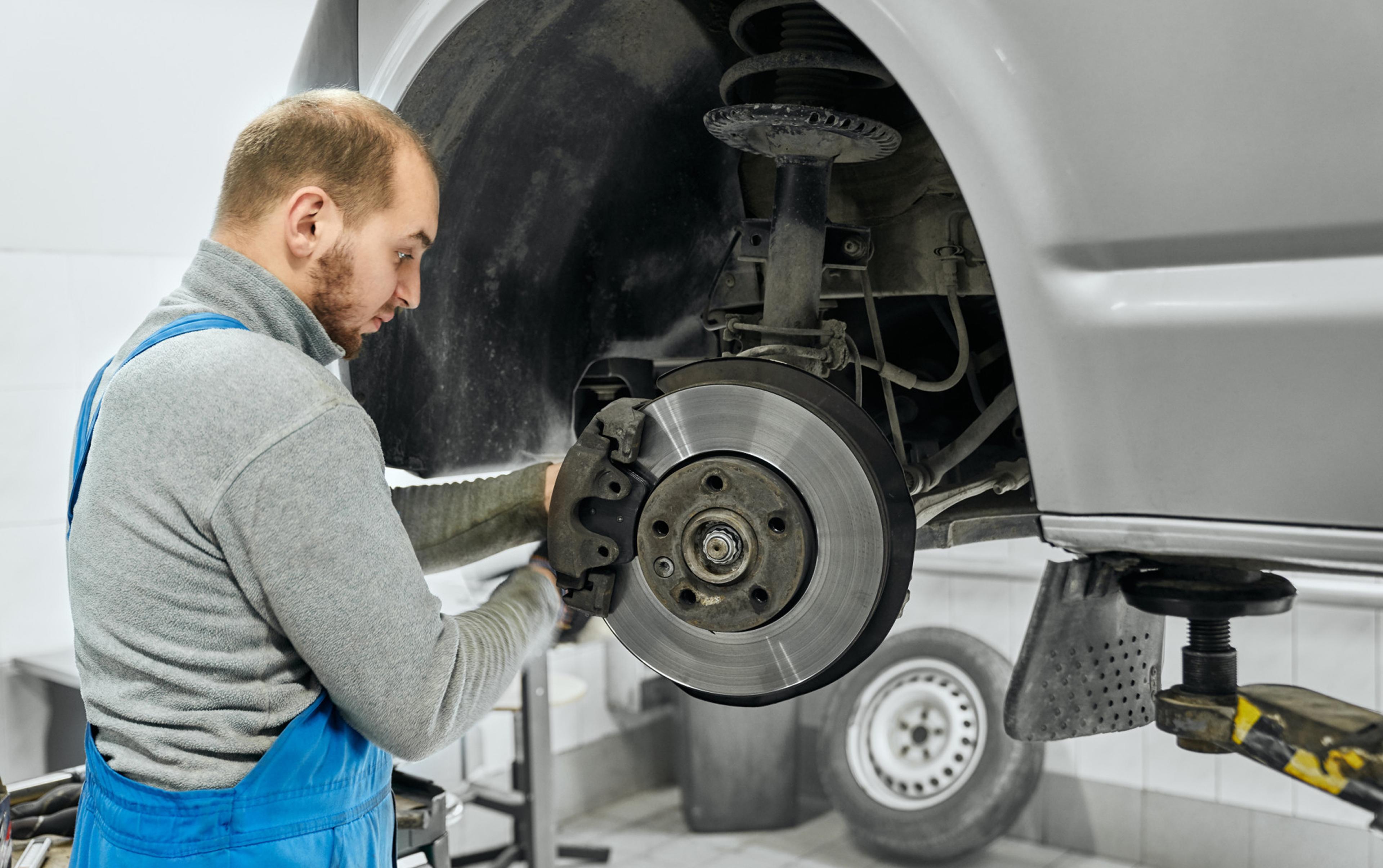
Brake maintenance and wear
Brakes are among the most safety-critical and heavily used components in a vehicle. Every time you drive, high mechanical forces, extreme temperature differences, and external influences such as moisture, dirt, and road salt affect the entire braking system. Despite this constant stress, signs of wear are often only noticed at a late stage in everyday use, as they develop gradually and are hardly noticeable at first. Changes in braking behavior are often compensated for until symptoms such as brake noise, a longer braking distance, or an uneven pedal feel become apparent. What is particularly problematic is that many drivers classify warning signs such as squeaking brakes in the car as harmless, even though they may already indicate incipient brake disc wear or uneven pad contact. In order to ensure long-term safety, it is therefore crucial to recognize typical signs at an early stage and react in good time before a complete brake replacement becomes necessary or consequential damage occurs.
This article shows how wear and tear in the brake system manifests itself, why brakes lose performance gradually rather than suddenly, and in which situations it is advisable or even essential to replace brake components. It also explains the possible causes of noises, vibrations, or a noticeable drop in performance, and why regular checks are crucial to keeping the brake system in good working order.
How wear occurs in the brake system
When braking, the kinetic energy of the vehicle is converted into heat in a controlled manner, a physical process that places a heavy load on the entire braking system. This heat is generated by friction between the brake pads and brake discs in disc brakes or between the brake shoes and brake drums in drum brakes. In both cases, material is removed from the friction partners, which is technically necessary to generate braking effect, but at the same time inevitably leads to wear. Brake disc wear in particular plays a central role here, as brake discs are open in design and are directly exposed to high temperatures and external influences. Every time the brakes are applied heavily, local heat peaks occur, which place a thermal load on the material. If this heat is not dissipated evenly, the brake discs can warp slightly or wear unevenly. Such changes are enough to cause brake noise, vibrations, or a pulsating brake pedal.
The wear process is slightly different for drum brakes. Although the closed design protects the brake system better from dirt and moisture, it also means that the heat generated cannot escape as easily. The brake shoes rub against the inside of the brake drum, causing heat to build up inside. During prolonged or intensive use, this can cause the drum to warp or the brake shoes to rub unevenly. While disc brakes are more likely to cause squeaking brakes or vibrations in the car, wear and tear on drum brakes is often more subtle, manifesting itself in delayed response, uneven braking, or longer pedal travel. However, in both systems, as soon as the friction surfaces no longer work evenly, the efficiency of the entire braking system suffers.

Causes of wear
The actual degree of wear depends heavily on driving style, vehicle weight, and area of use. Frequent stop-and-go traffic in city centers leads to many short braking maneuvers, during which the braking system is constantly heated up and cooled down again. These thermal stresses promote wear on the brake discs in particular . Long downhill drives or high highway speeds, on the other hand, generate consistently high temperatures, which put additional stress on the materials. Heavy loads or towing also increase the required braking force and significantly accelerate the wear of brake pads, brake discs, or brake shoes.
In addition to active use, downtime also plays an important role. Vehicles that are mainly driven on short journeys or are stationary for long periods of time often develop corrosion on the friction surfaces. With disc brakes, this quickly becomes apparent in the form of rust spots on the brake disc, and with drum brakes, in the form of seized brake shoes or sluggish mechanics. When the vehicle is driven again, there is no even friction contact, which leads to grinding noises, uneven deceleration, or typical situations in which the brakes squeal in the car even though there is still sufficient lining available. If these conditions are ignored, the wear process intensifies, as uneven friction generates additional heat and puts strain on adjacent components.
Typical signs of brake wear
In most cases, brake disc wear develops gradually and is often only noticed in everyday use when there is a noticeable change in braking performance. Visually, worn brake discs are not always immediately apparent, as wear often first becomes apparent on the friction surface or through minimal deformation. Problems are much more likely to be noticed through the driving experience. The braking system no longer responds evenly, deceleration is less precise, and the driver notices changes in braking more clearly. The first signs of advanced brake disc wear are particularly noticeable at higher speeds or during heavy braking maneuvers. Accompanying brake noises or situations in which the brakes squeal in the car are also often early warning signs.
Typical signs of brake disc wear are:
- Vibrations in the brake pedal
- Rubbing braking effect
- Extended braking distance
- Unstable steering wheel when braking
If the brake discs become too worn, the brake pads can no longer make clean, full contact. The braking force is distributed unevenly, which not only reduces braking performance but also accelerates wear on other components. In such cases, a simple check is no longer sufficient, and timely brake replacement is necessary to prevent consequential damage to brake pads, brake calipers, or other parts of the brake system. Taking these signs seriously and reacting early ensures consistent braking performance, stable pedal feel, and long-term safe functioning of the brakes in your car.
When should you replace your brakes?

Dependence on use and vehicle type
It is not possible to specify a fixed mileage at which the brakes must be replaced. Wear and tear on the brake system depends heavily on driving style, vehicle type, and route profile. City traffic with frequent braking puts significantly more strain on the brake system than long highway drives at a steady speed. Mountainous routes, towing trailers, or sporty driving also increase thermal and mechanical stress considerably.
As a rough guide, a modern brake system lasts on average between 40,000 and 120,000 kilometers. This wide range is explained by very different operating conditions. In addition to mechanical wear, corrosion also plays an important role. Moisture and road salt attack friction surfaces, guides, and mounting points and can cause irreparable damage to the brake system, even if the braking performance initially appears to be sufficient.
Why it is crucial to replace brakes in good time
If the necessary replacement is delayed for too long, not only does brake disc wear increase, but so does the strain on other components. Brake calipers, guides, or wheel brake cylinders can be affected, making repairs significantly more complex and costly. In addition, the risk of uneven braking, vibrations, or safety-critical situations increases noticeably.
While brake pads on older vehicles were often replaced much earlier and independently of the discs, this practice has changed in modern cars. Today, pads and discs are technically matched and wear more evenly. For this reason, they are usually replaced together in practice to ensure consistent braking performance, even wear, and a stable pedal feel. Replacing brakes in good time therefore not only protects individual components, but also maintains the functional reliability of the entire brake system in the long term.
Why regular maintenance is crucial
The braking system only works reliably if all components are clean, flexible, and coordinated with each other. Dirty guides, stuck pistons, or corroded contact surfaces cause brakes to engage unevenly or not release completely.
Regular maintenance helps with this:
- Detect wear at an early stage
- Correctly identifying brake noises
- Limiting brake disc wear
- Avoiding costly consequential damage
Classifying brake noises correctly
Brake noises are among the most common warning signs in everyday life and are an important indication of the condition of the brake system. The following applies: Not every noise immediately indicates an acute danger, but every unusual noise should be taken seriously and correctly classified. Brakes are safety-relevant components, and acoustic changes usually occur when individual components no longer work together optimally.
A particularly common phenomenon is brake squeal in cars, which occurs mainly at low speeds, when maneuvering, or when braking lightly. This squeal is caused by high-frequency vibrations between the brake pads and brake discs. This can be caused by glazed or hardened brake pads, whose friction material has lost its original properties due to high temperatures. Missing, damaged, or incorrectly installed damping elements such as anti-squeal plates or spring clips can also cause vibrations to be transmitted unhindered. External influences also play a role: moisture, road salt, or fine brake dust on the friction surfaces can temporarily alter the friction behavior and cause noise, especially after prolonged periods of inactivity or in wet weather.
In addition to squeaking noises, grinding or metallic noises are also a serious warning sign. They often occur when the brake pads have reached their wear limit and the metal backing plate is already in contact with the brake disc. At this stage, wear is no longer limited to the pads, but directly affects the brake discs. Brake disc wear then increases significantly, which not only impairs braking performance but can also cause expensive consequential damage to the entire braking system.
Uneven wear can also contribute to brake noise. If brake pads wear unevenly, brake calipers are stiff, or guides no longer work properly, uneven friction contact occurs. This can manifest itself acoustically in the form of grinding, pulsating, or rhythmic noises and is often accompanied by vibrations or an uneven pedal feel. In such cases, the brake system is usually no longer correctly adjusted, even if the braking performance still appears to be sufficient.
Conclusion
Brake wear is an unavoidable part of driving, but it can be detected early and limited through attentiveness and regular checks. Since wear processes in the brake system usually develop gradually, the first warning signs are often underestimated in everyday use. Typical indications such as a change in pedal feel, braking noises, or situations in which the brakes squeal in the car are often considered harmless, even though they may already indicate incipient brake disc wear or uneven loads.
A reliably functioning brake system requires that all components work together smoothly and are maintained in a timely manner. If the right time to change the brakes is missed, not only does the wear and tear on individual parts increase, but so does the risk of consequential damage within the entire brake system. Uneven friction, excessive heat build-up, or seized components can significantly impair braking performance, even if the vehicle still appears to be safe.
Taking brake noises seriously, having the condition of the brake components checked regularly, and not waiting until there is a noticeable loss of performance to react significantly increases safety and avoids unnecessary repairs. Replacing brakes at the right time ensures consistent deceleration, a stable pedal feel, and long-term reliable functioning of the brakes in your car.