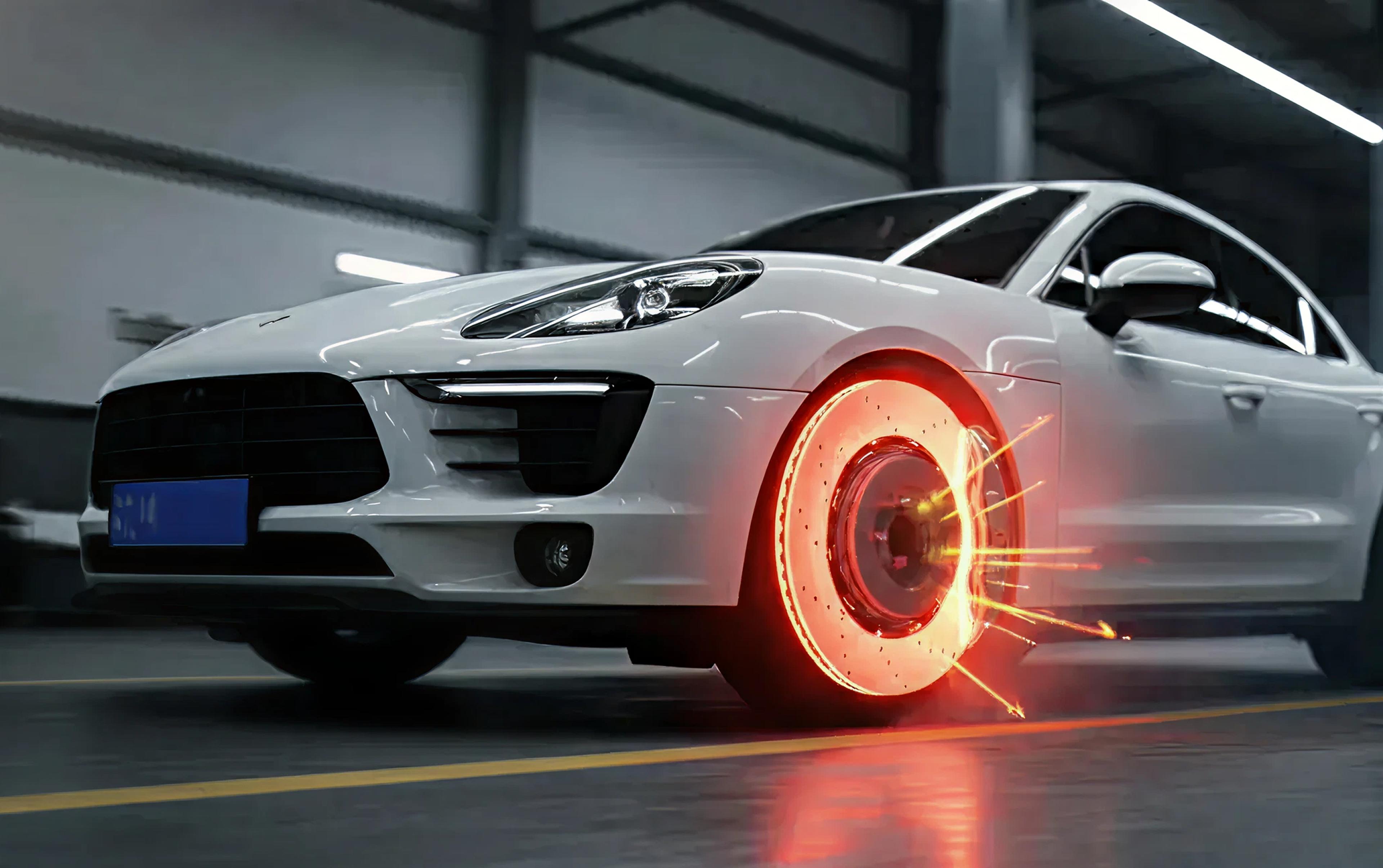
Why brake discs are crucial for braking performance
The quality and condition of the brake discs directly determine how effectively the brake system works. Unevenness, grooves, or heat distortion lead to uneven friction contact between the pad and the disc. The driver feels this as a pulsating pedal or a fluttering steering wheel. This not only impairs the driving experience, but also increases the braking distance. Especially at high speeds, even a slight knock on the disc can have critical consequences.
Modern brake discs have to cope with enormous thermal and mechanical forces, because every time they brake, they convert kinetic energy into heat. Temperatures of well over 400 °C are not uncommon. To cope with these stresses, high-quality discs are made of specially alloyed cast iron or composite materials that remain both heat-stable and dimensionally stable. Depending on the application, there are different designs such as ventilated, perforated, or slotted discs, each optimized for specific cooling, deceleration, and stability requirements.
Another key aspect is heat dissipation. Ventilated brake discs have internal channels that transport hot air to the outside during braking. This reduces the temperature more quickly and keeps the disc dimensionally stable. In sporty or heavy vehicles, perforated or slotted versions are also used to dissipate the friction gases that are generated, thus creating a more consistent braking feel. This difference is particularly noticeable in many standard brake systems. High-quality discs respond more directly, stably, and precisely.
Structure of a brake disc
Friction rings
The friction rings form the two outer braking surfaces of the brake disc and are therefore the area on which the brake pads rest during every deceleration. They are the functional center of every disc brake, because this is where the friction that slows down the vehicle is generated. The quality of the friction rings therefore directly determines the braking force, temperature resistance, and behavior of the brake systems under extreme conditions. High-quality friction rings are made of temperature-stable cast alloys or modern composite materials that are specially designed to distribute high thermal loads evenly. During intensive use, such as repeated emergency braking, downhill driving, or high loads, inferior friction rings can overheat. The result: fine hairline cracks, grooves, or thermal deformation, which later manifest themselves to the driver as a rubbing sensation when braking.
If friction rings are severely worn or thermally damaged, replacing the brake discs becomes inevitable, as the disc no longer provides a defined friction surface. Anyone looking to buy brake discs should therefore pay particular attention to the condition, hardness, and surface quality of the friction rings. These factors determine the service life of the entire disc brake and thus directly affect braking distance and driving safety.
Pot / disc hub
The pot, also known as the disc hub, connects the brake disc to the wheel hub and ensures absolutely centered, play-free installation. Without this stable base, no brake disc could run safely, because the pot transfers all forces between the wheel and the brake system.
It is usually made of high-strength cast steel or cast aluminum and is particularly susceptible to mechanical stress, corrosion, or warping. Even minor damage to the pot can cause the brake disc to no longer run smoothly—a common cause of vibrations or uneven braking performance.
The condition of the pot plays a particularly important role when replacing brake discs. If it is warped or shows signs of rust, the new disc will not sit flat and will lose its precision.
Steps
Webs are located between the two friction rings and form the inner skeleton of internally ventilated brake discs. Their geometry determines how stable the disc is and how efficiently it dissipates heat. Webs can be straight, curved, spiral-shaped, or designed as special rib constructions. Each design influences the flow of cooling air and thus the temperature development in the friction ring. The better the web geometry, the faster the brake disc can dissipate heat, which is a decisive advantage when driving with frequent braking or in heavy vehicles. At the same time, the structure must be stable enough that it does not break or warp even at extreme temperatures.
When buying brake discs, it is therefore worth looking for high-quality bridge designs. Particularly powerful brake systems use optimized, asymmetrical bridges that improve airflow and distribute the load evenly. For sporty vehicles or cars that frequently carry heavy loads, the quality of the bridges can determine the service life of the brake discs.

Ventilation channels
Ventilation channels are the cavities between the ribs and ensure that air flows through the interior of the brake discs. They are a crucial component of any high-performance disc brake, as they keep temperatures under control even under heavy use.
While driving, the rotating brake discs suck air through the channels. This air cools the friction rings from the inside and prevents the brake system from overheating. The better the airflow, the more resistant the disc remains to fading, cracks, or deformation. If the ventilation channels are dirty, clogged, or damaged, the temperature can rise uncontrollably. This can lead to blue-tinged friction rings, longer braking distances, or a pulsating pedal, which are typical signs of disc deformation.
Coating
Modern brake discs are almost always coated today to protect them from corrosion. These protective coatings consist of special zinc flake coatings, powder coatings, or UV-resistant coatings. They cover the pot, the disc edges, and often also the bridges, i.e., all areas that are not in direct contact with friction.
The coating prevents rust, ensures a permanently clean surface, and extends the service life of the entire disc brake. A high-quality coating is a huge advantage, especially for vehicles that are driven a lot in winter or are frequently parked outdoors.
Drilled holes and slots
Drilled holes or slotted grooves are features of sports and performance brake discs. They support the disc brake in various areas:
- better heat dissipation
- Faster drainage of water and brake dust
- More stable friction behavior under high loads
- Shorter reaction time during braking cycle
Drilled holes slightly reduce the weight of the disc and allow heat to escape more quickly, while slots remove gases that form between the lining and friction ring when heated to high temperatures. This keeps the friction contact clean, which is an important criterion in sports brake systems.
Anyone looking to buy brake discs should pay attention to quality: cheap, incorrectly drilled discs can crack or deform. Professional manufacturers, on the other hand, use thermally relieved drill holes or precisely calculated slot geometries that increase performance without compromising stability.
For sporty drivers or heavy vehicles, slotted or drilled discs can offer a significantly more direct braking feel and more consistent temperature behavior, often a reason for a planned brake disc change in order to noticeably upgrade the braking system.
When it's time to change brake discs

Typical signs of worn brake discs
Brake discs are among the most important components of modern braking systems and are subject to enormous thermal and mechanical stress in every disc brake. Although they are made of robust material, their wear often progresses unnoticed. It usually only becomes noticeable when the brake pedal feels soft, vibrates, or is imprecise.
One of the most common warning signs is vibration in the pedal, which can even be felt in the steering wheel during heavy braking or at higher speeds. These vibrations occur when brake discs are unevenly worn or slightly warped, indicating that the disc brake is no longer distributing the braking force evenly.
Another serious symptom is an extended braking distance. If the brake discs generate less friction due to wear, the entire braking system reacts with a delay. This is particularly noticeable during emergency braking or on wet roads.
Metallic grinding noises are particularly noticeable and dangerous, usually indicating deep grooves, rust scars, or already damaged friction surfaces. In such cases, it is essential to replace the brake discs. Visible discoloration or severe rust edges are also clear indications of overheating or uneven wear.
Why replace brake discs and pads together?
As soon as one of these symptoms occurs, it is not only the brake discs that should be checked; the brake pads also play a crucial role. Even the best brake discs cannot perform to their full potential if the pads are unevenly worn, glazed, or hardened. That is why professional workshops almost always replace brake discs and pads together, on each axle.
This is the only way to ensure that the disc brake engages evenly, the braking distance remains short, and the brake system regains its full deceleration performance.
If you want to buy brake discs yourself, it is essential to ensure that they are the right size, made of high-quality materials, and have the right design (e.g., internally ventilated, perforated, or coated). Only correctly dimensioned components can ensure a safe and reliable braking system.
Types of brake discs
Solid material brake discs
Solid brake discs are among the most commonly used variants in everyday vehicles, especially on the rear axle. They are made entirely of solid cast iron, making them particularly resistant to cracks and very durable. Since the rear axle only handles a small portion of the braking power, its simple design is entirely sufficient, offering stable deceleration values without complex cooling technologies. Solid discs are also inexpensive and virtually maintenance-free, making them ideal for small and medium-sized production vehicles. They deliver reliable basic braking performance without being sensitive to dirt or high temperature changes.
Ventilated brake discs
Ventilated brake discs are now fitted to the front axle of almost all vehicles because this is where the highest braking force is generated. They consist of two parallel discs with air channels between them, through which cool air flows continuously while the vehicle is in motion. This design significantly improves heat dissipation and prevents overheating during repeated braking, for example in city traffic or when driving downhill. Thanks to improved thermal stability, the braking distance remains consistently short and the pedal feel reliable. Ventilated brake discs are therefore the perfect combination of everyday practicality, safety, and technical efficiency.
Perforated brake discs
Perforated brake discs can be recognized by the small holes in the friction surface. They are used in sportier road vehicles or as a performance upgrade. The holes dissipate water and brake gases more quickly and ensure that the brake pads "grip" immediately. This improves responsiveness, especially in wet conditions or when the brakes are cold. In addition, the improved gas dissipation contributes to a more direct pedal feel. Although they are slightly more susceptible to hairline cracks in extreme continuous heat, they do not pose any problems in normal road use. Perforated brake discs are a popular choice for drivers who want sportier braking characteristics.
Slotted brake discs
Slotted brake discs feature elongated grooves that actively remove dirt, dust, and friction gases from the braking surface. This ensures that contact between the pads and brake discs remains stable, even when the vehicle is heavily loaded, frequently towing a trailer, or being driven in a sporty manner. The slots also prevent the brake pads from glazing and improve the coefficient of friction during repeated braking maneuvers. In everyday use, slotted brake discs offer a particularly controlled braking feel and consistent deceleration, ideal for heavy vehicles, SUVs, or powerful road cars.
Everyday stresses
During daily driving, heat, abrasion, moisture, and mechanical forces all act on the brake discs at the same time. If a vehicle is often driven in city traffic or brakes frequently due to stop-and-go driving, this results in cyclical temperature changes. These thermal stresses can cause the surface to change or the disc to warp slightly.
External influences also play a major role: rain, road salt, fine brake dust, and rust attack the surface. Rust layers can form on the friction surface, especially when a vehicle is parked for long periods of time. The next time the brakes are applied, these layers are worn away, which leads to noise or uneven deceleration in the short term. However, if such deposits remain, the disc can develop grooves, a common problem that eventually forces the brake discs to be replaced.
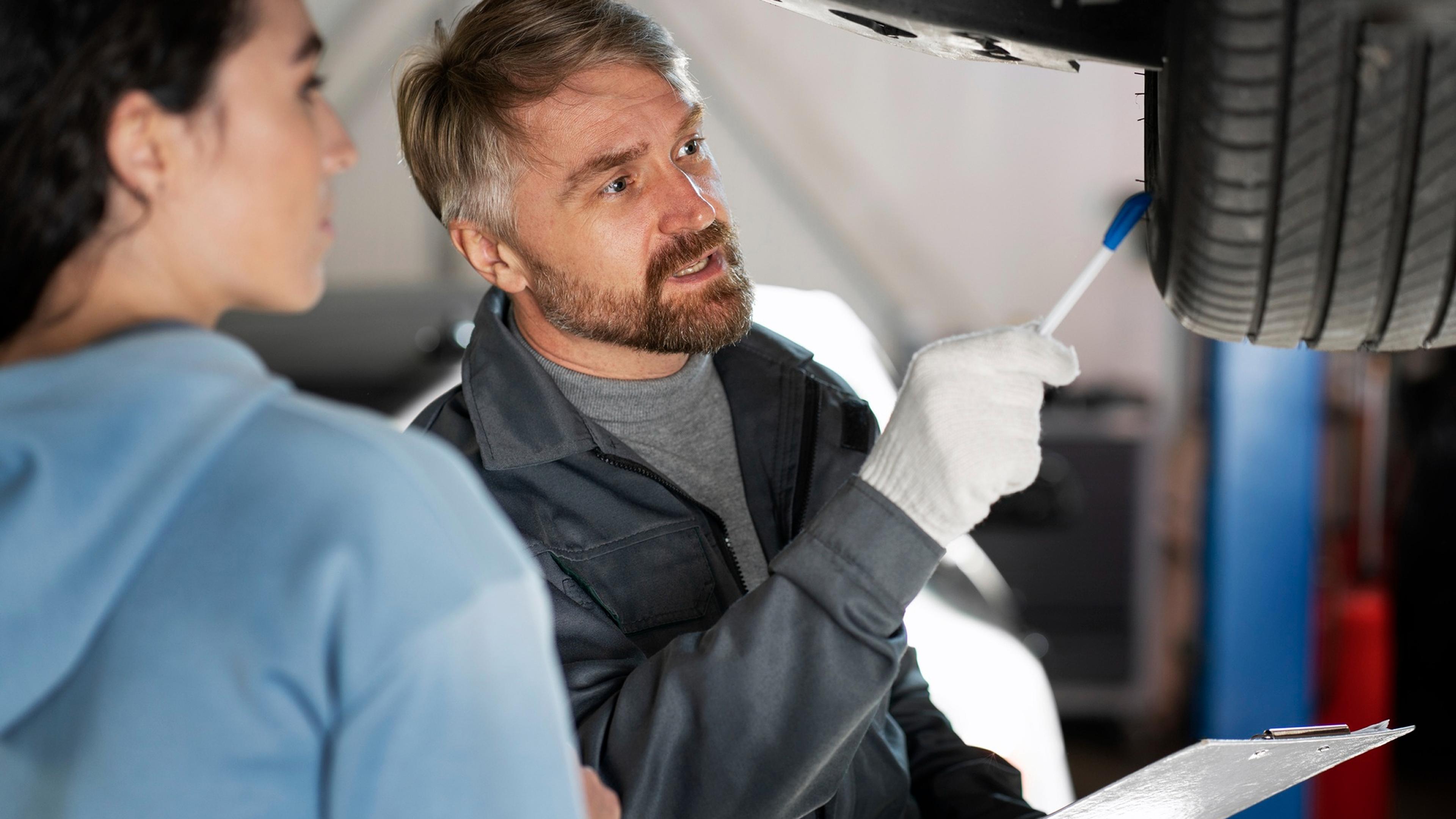
Why high-quality brake discs?
High-quality brake discs not only exhibit less wear, but also maintain stable friction coefficients over a long period of time. As a result, they develop less heat distortion, remain dimensionally stable, and contribute to a more consistent braking effect. This means that drivers are not only safer on the road, but also need to replace their brake discs less often. This difference in quality is particularly noticeable in heavy vehicles or when driving regularly on the highway.
Tip:
Good brake discs protect the brake pads because they offer smoother and more stable surfaces. This in turn reduces noise, ensures even wear, and extends the service life of the entire brake system.
Conclusion
Brake discs play a central role in the entire braking system because they directly determine how reliably a vehicle decelerates in every situation. Their task is more than just slowing down the wheel; they must absorb heat, dissipate it evenly, and remain dimensionally stable in the process. It is precisely these properties that determine whether a vehicle brakes smoothly, in a controlled and predictable manner, or whether vibrations, extended braking distances, and an uncertain pedal feel occur.
High-quality brake discs withstand thermal stress better, warp less, and provide a consistent friction surface even after many braking cycles. This not only reduces wear on the pads, but also lowers the risk of safety-critical situations. So, if you rely on high-quality components and detect wear in good time, you can ensure that your brake system works consistently and reliably, both in everyday use and in demanding driving situations.