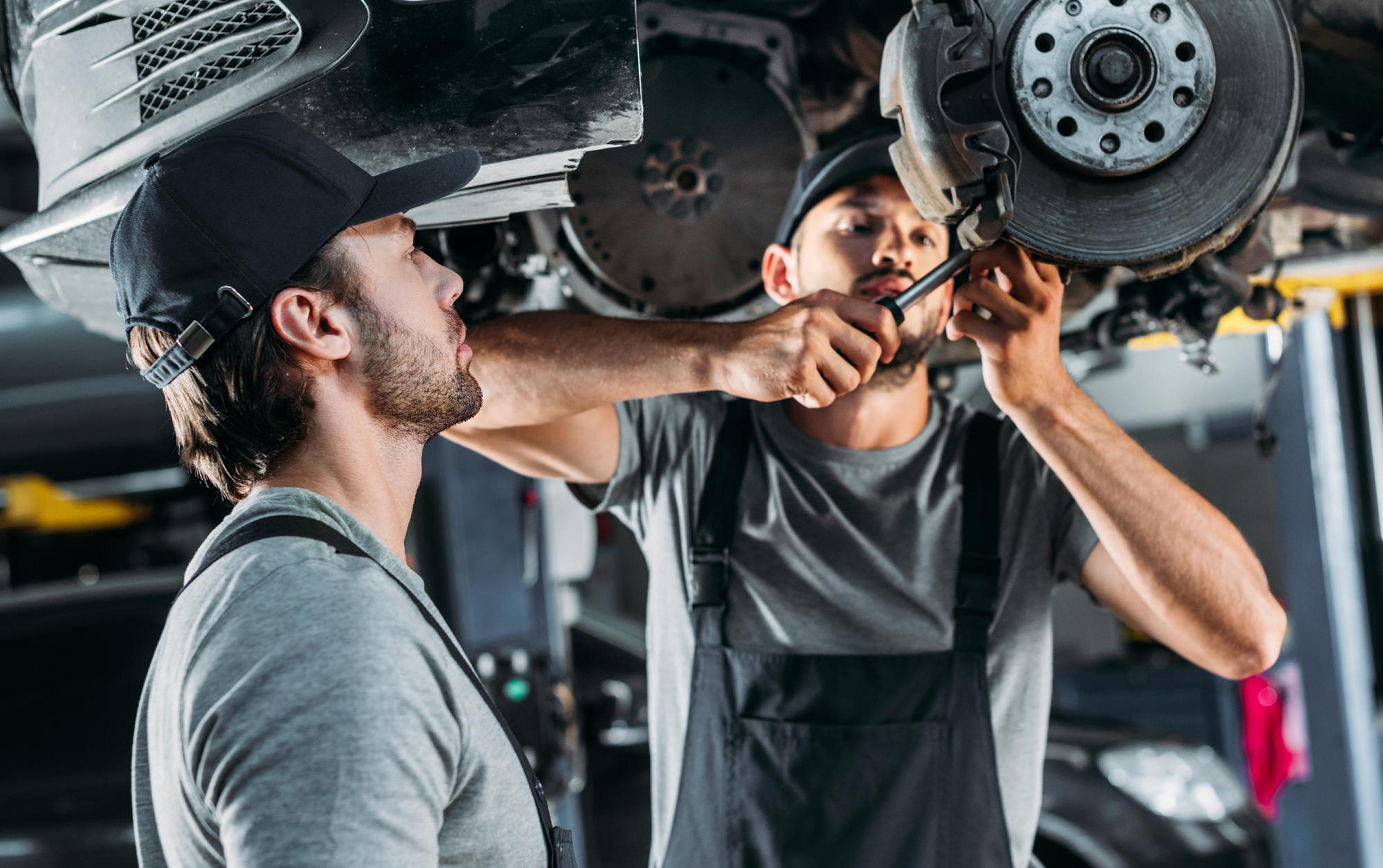
Recognizing problems with brakes
Brakes are one of the most important safety systems in a car, because they determine how controlled and reliable a vehicle's deceleration is in every driving situation. Whether in heavy city traffic, on the highway, or in a sudden dangerous situation, the braking system must respond precisely and without delay at all times. Despite their central importance, however, problems with brakes rarely arise abruptly. Much more often, they develop gradually and go unnoticed in everyday use for a long time.
The first signs are often underestimated or misinterpreted. Brake noises, slight brake juddering, or occasional brake squeaking in the car are initially considered harmless by many drivers. In fact, however, these very symptoms can indicate incipient wear on brake pads, increasing brake disc wear, or irregularities in the brake system. The aim of this article is to help you recognize typical brake problems at an early stage, better understand their causes, and determine when it is advisable to have them checked, right up to replacing the brakes in good time before safety-related damage occurs.
Why brake problems are particularly critical
Brake problems have a direct impact on driving safety, as they affect the vehicle's central function: safe deceleration and stopping. Even minor deviations in the brake system can lead to a longer braking distance, uneven braking performance, or unstable vehicle response when braking. This can have serious consequences, especially at high speeds or in dangerous situations.
The critical issue is that many defects do not become apparent suddenly. Squeaking brakes, slight vibrations in the steering wheel, or a change in pedal travel often occur gradually and are compensated for in everyday driving. Drivers get used to these changes, even though they are clear warning signs. If these signs are ignored, wear on the brake pads and brake discs can increase. Brake disc wear increases, heat build-up rises, and adjacent components such as brake calipers or hydraulic components are subjected to additional stress.
If action is taken too late, what initially appears to be simple wear and tear can develop into complex damage to the entire brake system. In such cases, minor maintenance is often no longer sufficient, and a complete brake replacement becomes necessary. Early detection and action are therefore crucial in order to maintain full braking performance, limit repair costs, and, above all, ensure road safety.
Typical brake problems

Brakes squeak or make noises
Brake noise is one of the most common problems experienced by drivers in everyday life. Squeaking brakes in cars often occur at low speeds, when maneuvering, or when braking lightly. This is usually caused by high-frequency vibrations between the brake pads and brake discs, which occur when the friction surfaces are no longer optimally matched. Brake pads often become glazed or hardened, for example due to high thermal stress caused by frequent braking or sporty driving. The friction material loses its original structure and becomes more prone to noise.
Missing or damaged damping elements such as anti-squeal plates, spring clips, or sliding foils also contribute to brake noise. These components are designed to absorb vibrations and prevent them from being transmitted to the brake caliper or wheel suspension. If they are missing or incorrectly installed, even a brake system that is still technically functional can become clearly audible. External influences also play a role: moisture, road salt, or fine brake dust can temporarily alter friction behavior and cause brakes to squeak in the car, even though there is still sufficient material available.
The problem becomes particularly serious when the noises occur continuously or become louder. In such cases, there may already be uneven brake disc wear or the brake pads may no longer be in full contact with the disc. If this is ignored, wear will continue to increase and premature brake replacement will be necessary to avoid consequential damage.
Brakes jerk or vibrate
When brakes judder, this usually manifests itself in a pulsating brake pedal or noticeable vibrations in the steering wheel, especially at higher speeds or during heavy braking maneuvers. One of the most common causes is brake disc wear that is not evenly distributed across the entire friction surface. Intense heat, abrupt cooling, or long periods of inactivity can cause brake discs to warp slightly or wear down unevenly. These so-called thickness deviations cause the brake pads to have varying contact with the disc as it rotates, which causes the typical juddering.
Unevenly worn brake pads can also increase brake noise and vibration. If pads wear unevenly or do not move smoothly due to stiff guides, constant friction contact is not achieved. Thermal overload can also play a role, for example, when driving downhill frequently, towing a trailer, or driving in a sporty manner. The resulting heat peaks change the material structure of the brake discs and accelerate wear.
In addition to the noticeable loss of comfort, this problem also has a negative effect on braking performance. Deceleration is no longer smooth, which can increase the braking distance. If the jerking is ignored, brake disc wear will increase, and timely brake replacement will become unavoidable in order to prevent further damage to brake calipers or wheel bearings.
Declining braking performance
Declining braking performance is one of the most critical signs of problems in the braking system. It often manifests itself in the form of a longer braking distance, a spongy or soft brake pedal, or the feeling that the vehicle is slow to respond to pedal pressure. In many cases, the cause is severely worn brake pads that are below their minimum thickness and can no longer generate sufficient friction. Advanced brake disc wear also means that the contact surface between the pad and the disc no longer works optimally.
Hydraulic problems also play a major role. Air in the brake system, old or water-contaminated brake fluid, and leaky lines reduce the effective brake pressure that can be transmitted. In such situations, the brake pedal feels soft or spongy, even though the brakes appear to be intact on the outside. What is particularly dangerous is that this type of performance loss often occurs gradually and is unconsciously compensated for by the driver, for example by pressing the pedal harder.
At the latest when braking performance deteriorates significantly, replacing individual components is usually no longer sufficient. Instead, the entire system must be checked. Professional brake replacement, including inspection of brake discs, brake pads, and brake fluid, is then crucial to restore full braking performance and ensure safety.
Brakes grinding continuously
Squealing brakes are one of those problems that often go unnoticed for a long time, but can cause particularly high follow-up costs. If brakes do not release completely, the brake pads remain in constant contact with the brake disc. This is often caused by stuck brake calipers, stiff guide pins, or blocked brake pistons that no longer work properly due to corrosion, dirt, or lack of lubrication. In this condition, permanent friction occurs even without pressing the brake pedal.
The consequences are serious: constant friction generates intense heat, which greatly accelerates wear on the brake discs. At the same time, the brake pads wear out extremely quickly, often resulting in loud braking noises such as grinding or grinding. In addition, fuel consumption increases as the vehicle is constantly working against the braking resistance. In extreme cases, this can even lead to overheating, discoloration of the brake discs, or damage to adjacent components.
If this problem is not rectified in time, the only option is often to replace the brakes early, which means that not only the pads and discs, but also the brake calipers or pistons have to be repaired or replaced. Early diagnosis not only saves costs, but also prevents safety-related failures of the brake system.
Common causes of brake problems

Wear on brake pads and brake discs
Wear on brake pads and brake discs is the most common cause of brake problems and, at the same time, a completely normal process during driving. Every time the brakes are applied, kinetic energy is converted into heat through friction, causing tiny particles of material to detach from the friction surfaces. This abrasion is technically necessary, but over time it leads to brake disc wear and a reduction in pad thickness. The speed at which this process occurs depends largely on driving style, vehicle weight, and the area of application.
Frequent stop-and-go traffic in city centers, short distances with frequent cold braking, and heavy vehicle loads are particularly stressful. Sporty driving with heavy deceleration also generates high temperatures, which place thermal stress on both the brake pads and the brake discs. This heat can cause friction surfaces to harden or glaze over, which not only accelerates wear but also causes brake noise. In many cases, the problem starts with slight brake squeaking in the car, which initially occurs only sporadically but later becomes permanent.
If wear is not detected in time, the brake pads will eventually no longer make full contact or reach their minimum thickness. At the same time, brake discs may wear unevenly or develop grooves. At this stage, a visual inspection alone is often no longer sufficient, and a complete brake replacement is necessary to ensure uniform and safe braking performance again.
Problems in the brake system
In addition to mechanical wear, problems in the brake system itself also play a key role in reduced braking performance. A common cause is air in the hydraulic system, which prevents brake pressure from being transmitted directly and without loss to the brakes. The result is a soft or spongy brake pedal, where the necessary pressure is only built up after a delay. In such cases, the brake system feels imprecise and unsafe, even if the brake pads and brake discs still have sufficient material.
Old or contaminated brake fluid also significantly impairs the function of the brake system. Brake fluid is hygroscopic, meaning it attracts water from the ambient air. As the water content increases, the boiling point of the fluid decreases, which can lead to vapor bubble formation under heavy loads. This drastically reduces brake pressure and exacerbates symptoms such as increased braking distance or delayed response. At the same time, moisture promotes corrosion within the system, which in the long term leads to stuck pistons or sluggish valves.
Such defects often manifest themselves gradually and are compensated for in everyday use for a long time. In addition to noticeably poorer braking performance, brake noises or uneven response are also common. If the problem is not remedied, it can lead to individual components being overloaded and premature brake replacement becoming necessary, even though the original cause was in the hydraulic system.
External influences
External influences are among the most underestimated causes of brake problems. Moisture, road salt, dirt, and dust affect the brake system on a daily basis and attack both friction surfaces and moving parts. Brake discs are directly exposed to the environment, especially in open systems such as disc brakes. After rain, prolonged periods of inactivity, or in winter, rust quickly forms on the friction surfaces, which can lead to brake noise or rough response when braking for the first time.
Moving parts such as guide pins, brake calipers, and brake pistons are also sensitive to corrosion and contamination. If these parts no longer move smoothly, the brakes will not release completely after braking. This leads to permanent grinding, increased heat generation, and accelerated brake disc wear. In many cases, drivers then report increased rolling resistance, more brake dust, or squeaking brakes in the car, even though the pads are not yet completely worn out.
Long periods of inactivity further exacerbate this problem. Vehicles that are rarely moved or mainly driven short distances are more prone to corrosion on friction surfaces and mechanical parts. The brakes then no longer work evenly, leading to jerking, noise, and uneven wear. If these external influences are ignored, there is an increased risk that the brakes will need to be replaced prematurely, even though the actual cause was a lack of movement or maintenance.
When should you take action and have your brakes checked?
When it comes to problems with the brake system, the following rule always applies: waiting increases the risk. As soon as the brakes squeal in the car, persistent brake noises occur, the brakes jerk, or the deceleration noticeably decreases, the brake system should be checked promptly. A longer braking distance or a fluctuating pedal feel are clear indications that the brake system is no longer working evenly. This is often caused by advanced brake disc wear, unevenly worn brake pads, or problems with the hydraulics.
Not every noise or change immediately means that the brakes need to be replaced. Nevertheless, early inspection is crucial to prevent major damage. If worn brake pads are used for too long, they will damage the brake discs, which significantly increases the cost of repairs. What would otherwise be a relatively inexpensive maintenance job can quickly turn into an extensive replacement of several components. Acting early not only protects safety, but also reduces follow-up costs and maintains braking performance at a high level in the long term.
Warning signs that should be taken seriously
In most cases, brake problems are indicated early on by clear warning signs, but these are often underestimated or ignored in everyday life. The most important indicators include warning lights illuminating in the cockpit, a change in pedal travel or sponginess, and unusual braking noises. It is particularly noticeable when brakes squeal in the car, grind, or make grinding noises that were not there before. Such acoustic signals often occur when brake pads are unevenly worn, foreign objects are between the pad and the disc, or the brake discs are already significantly worn.
Another serious warning sign is a burning smell after braking, which indicates overheated brake components. This can occur when brakes are grinding, brake calipers are not releasing completely, or the system is operating under high load for long periods of time. Visible damage such as deep grooves on brake discs, heavy rust, or extremely thin brake pads are also clear signs that the brake system is losing its optimal function. When such symptoms appear, there should be no hesitation, as small defects can quickly develop into safety-related problems.
Regular maintenance as the best preventive measure
The most effective measure against brake problems is consistent and regular maintenance of the entire brake system. Routine checks of brake pads, brake discs, and hydraulics allow signs of wear to be detected early and remedied in a targeted manner. This means that brake disc wear can be detected in good time before vibrations, jerking, or noticeable loss of performance occur. Many typical brake noises can also be avoided by using correctly installed, high-quality components and clean guides.
Regular maintenance also helps to ensure that a complete brake replacement is not necessary unnecessarily early. High-quality brake pads with coordinated friction coefficients ensure even wear and protect the brake discs from excessive wear. In addition, moving parts such as brake calipers, guide pins, and pistons are checked and kept in good working order, preventing grinding noises and overheating. Having your brake system checked regularly not only increases safety, but also ensures smooth braking, consistent braking performance, and a long service life for all brake components.
Conclusion
Brake problems rarely occur suddenly, but usually develop gradually over a longer period of time. Squeaking brakes in the car, noticeable jerking when braking, or persistent brake noises are therefore not minor issues, but important warning signs that may indicate incipient brake disc wear or unevenly worn brake pads. If these signs are ignored, not only will braking performance deteriorate, but so will the condition of other components in the braking system.
Responding early and having your brakes checked significantly increases road safety and avoids expensive consequential damage. In many cases, timely maintenance is sufficient to delay or completely avoid major repairs or a complete brake replacement. An intact, well-maintained brake system ensures consistent deceleration, a stable pedal feel, and reliable braking performance in every driving situation. It is therefore an indispensable basis for safe, controlled, and relaxed driving.