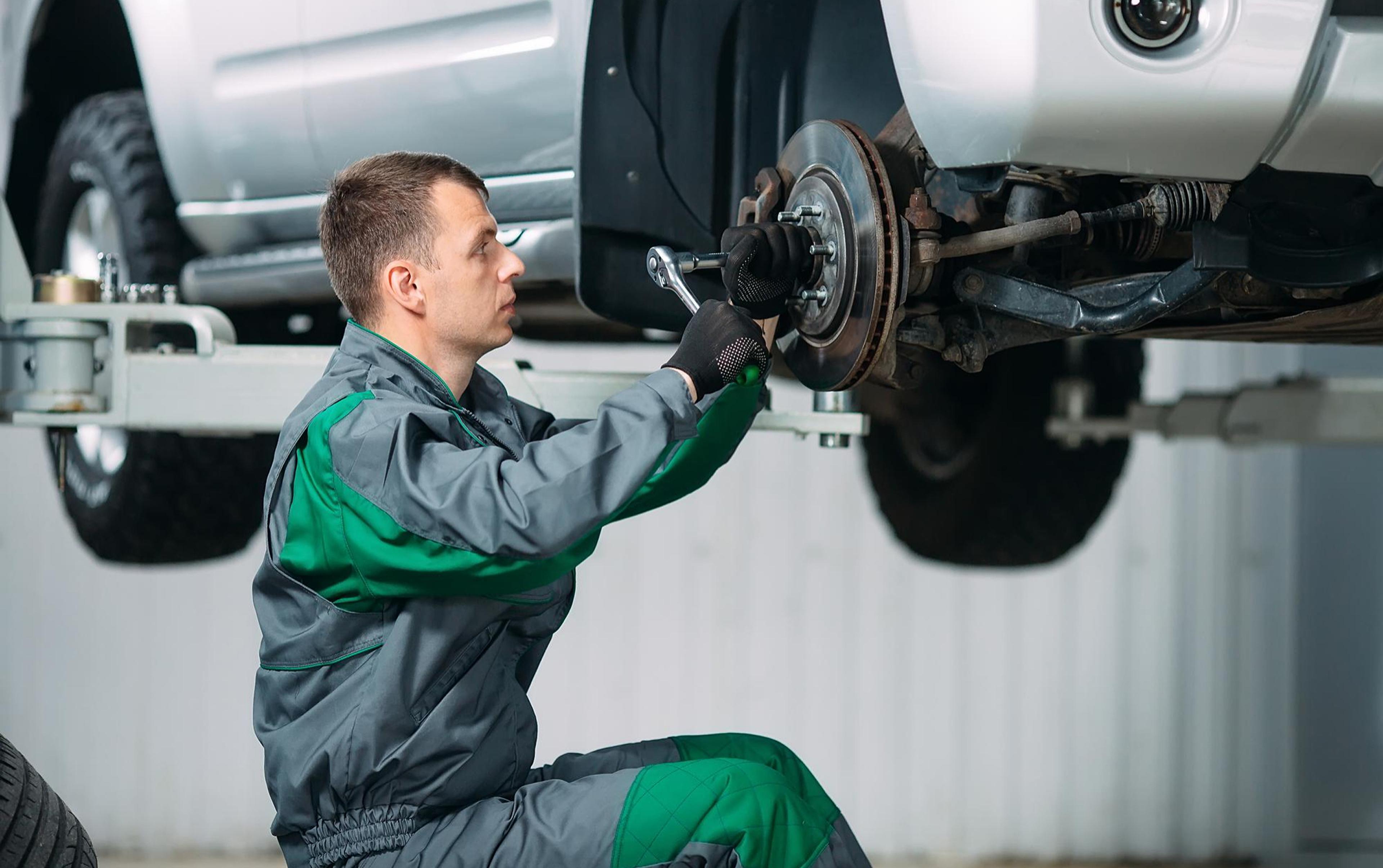
Types of brakes in cars
Brakes are one of the most important safety systems in a car, because they determine how controlled and reliable a vehicle can be decelerated in any driving situation. A brake system is much more than just a single component; it is a complex interaction of mechanical and hydraulic components. Not every brake system is constructed in the same way, and not every type of brake is suitable for every vehicle. Factors such as vehicle weight, engine power, maximum speed, and intended use have a major influence on which braking system is best suited for a particular application. Modern brakes in cars therefore often consist of a combination of different types of brakes. Disc brakes and drum brakes often work together within a vehicle to optimize the balance between braking performance, durability, and economy. This overview shows how modern braking systems work, what types of brakes are available, where they are used, and what is important in terms of design, use, and maintenance. Only by understanding the braking system as a whole can typical problems such as uneven wear or situations in which brakes judder be properly classified and avoided.
How does a vehicle's braking system work?
A braking system in a car has the task of converting kinetic energy into heat in a controlled manner in order to slow down or bring the vehicle to a safe stop. In modern vehicles, this is done almost exclusively by a hydraulic braking system, as it enables precise and even power transmission. When the brake pedal is pressed, the master brake cylinder generates pressure in the brake fluid, which serves as the transmission medium throughout the entire brake system. This pressure is transmitted to the brakes in the car via a closed pipe system. At the wheels, the hydraulic energy is finally converted into mechanical braking force. Depending on the design of the vehicle, this force acts either on brake pads, which are pressed against a rotating brake disc in disc brakes, or on brake shoes, which press outwards against the inner surface of the brake drum in drum brakes. For this interaction to function reliably, all components must be precisely matched to each other. Even small deviations, such as stiff components, uneven pad contact, or contaminated braking surfaces, can cause the brakes to jerk or the braking effect to no longer build up evenly. Therefore, the smooth interaction of all parts within the braking system is crucial for safety, driving comfort, and a stable braking distance.
Disc brake

Disc brakes are now the most widely used braking system in modern vehicles and have a significant impact on the safety and driving dynamics of current car brakes. Disc brakes are virtually standard, especially on the front axle, where most of the deceleration force is generated during braking. They consist of several precisely coordinated components: the brake disc as the rotating friction partner, the brake pads as the direct wear part, the brake caliper with hydraulically actuated pistons, and the hydraulic brake system, which reliably transfers the pedal pressure to the brake system.
When the brake pedal is pressed, brake fluid is pressurized and fed through lines to the brake caliper. This presses the brake pads evenly against the rotating brake disc. The resulting friction converts the vehicle's kinetic energy into heat, causing the car to slow down. A key advantage of disc brakes is their open design. The heat generated can be quickly dissipated into the environment. This means that braking performance remains stable and easy to control, even during repeated or heavy braking maneuvers.
Typical characteristics of disc brakes
Disc brakes are known for their high braking power, excellent modulation, and predictable pedal feel. Even under heavy loads, the braking distance remains constant, which is particularly important for powerful vehicles, sporty driving styles, or high speeds, which is why they are considered standard in these cases. If problems do occur, they often manifest themselves in vibrations or a feeling that the brakes are jerking, for example, in the case of warped brake discs or unevenly worn pads. Overall, disc brakes are considered a precise, powerful solution for modern vehicles where safety, control, and reproducible braking performance are paramount.
Drum brake

In contrast, the drum brake operates according to a closed principle and represents a technically proven alternative within modern braking systems. In drum brakes, brake shoes press against the rotating brake drum, which is firmly connected to the wheel hub, from the inside. The entire mechanism—consisting of brake shoes, return springs, adjustment mechanisms, and wheel brake cylinders—is completely enclosed by the drum.
This closed design offers several advantages for car brakes. Drum brakes are particularly durable because they are well protected from external influences such as dirt, water, and road salt. As a result, wear often occurs more slowly than with open systems. In addition, maintenance requirements are comparatively low, which makes them particularly attractive for vehicles with moderate braking loads. However, their weakness lies in heat dissipation. Since the heat generated can only escape to a limited extent, drum brakes are less suitable for permanently high loads.
Typical areas of application for drum brakes
Drum brakes are typically used on the rear axle of small and compact vehicles, where lower deceleration forces are at work. In recent years, they have also regained importance in electric and hybrid vehicles. Since these vehicles cover most of their deceleration through recuperation, mechanical brakes are used less frequently. Open systems are then more prone to corrosion, while drum brakes remain functional due to their closed design. If defects occur, they often manifest themselves in delayed response or an uneven braking feel, but less often in typical symptoms such as brake judder.
Overall, drum brakes are a robust, reliable solution within modern braking systems when durability, protection against environmental influences, and consistent performance under low loads are the primary considerations.
Which types of brakes are used where?
Choosing the right type of brakes is a key part of vehicle development, because the braking system must always be suited to the weight, performance, and use of the vehicle. Depending on the vehicle class, different combinations of disc brakes and drum brakes are used to achieve the optimum balance between safety, durability, and cost. The decisive factor here is not maximum braking performance alone, but rather the harmonious interaction of all components, so that the brakes in the car work reliably, evenly, and without undesirable effects such as brake judder.
Small and compact vehicles
Small and compact vehicles are generally lightweight, have moderate engine power, and are mainly used in city traffic. The demands placed on the braking system are correspondingly low compared to larger vehicle classes. A typical configuration here is a combination of disc brakes on the front axle and drum brakes on the rear axle.
The front axle does most of the braking work, which is why disc brakes are used there. They offer good controllability and respond reliably even with frequent starting and braking in city traffic. A drum brake is usually sufficient for the rear axle. It is durable, well protected against dirt and moisture, and requires little maintenance. This combination provides a sufficiently dimensioned braking system that is optimally designed for low vehicle weight and typical everyday use.
Mid-range and family vehicles
As vehicle weight and load increase, so do the demands placed on the brakes in the car. Mid-range and family vehicles are often driven on longer journeys, carry heavier loads, and regularly travel on highways. For this reason, disc brakes are usually installed on the front and rear axles.
Internally ventilated brake discs are often used in addition, as they enable better heat dissipation. This design provides greater thermal reserves, shorter braking distances, and more stable braking performance even under high loads. This reduces the risk of overheating or uneven braking. A correctly designed braking system in this vehicle class also prevents typical problems such as vibrations or the feeling that the brakes are jerking, even with frequent braking under full load.
SUVs and heavy vehicles
SUVs and heavy vehicles place particularly high demands on the braking system. Their heavy weight and higher center of gravity generate significantly greater forces during braking, which must be reliably controlled. Large disc brakes on all wheels are therefore standard in this vehicle class.
The brake discs are usually larger in size, often internally ventilated or specially designed to absorb large amounts of heat and dissipate it quickly. Drum brakes are rarely used here, as they cannot provide the necessary thermal stability under high continuous loads. A powerful disc brake system is essential for SUVs to ensure stable and safe braking performance even during emergency braking, downhill driving, or when towing a trailer.
Electric and hybrid vehicles
Electric and hybrid vehicles place new demands on modern braking systems. Recuperation generates a large proportion of the deceleration electrically, which means that the mechanical brakes are used much less frequently. Although this reduces wear and tear, it also presents new challenges.
Open disc brakes can corrode more quickly when used infrequently, which can lead to uneven braking performance in the long term. This is why drum brakes on the rear axle are regaining importance in this vehicle class. Their closed design effectively protects the mechanics from moisture and rust. The focus here is clearly on corrosion protection, durability, and reliable function over long service life, while disc brakes on the front axle continue to ensure precise deceleration.
Sports cars and performance classes
Sporty vehicles and performance models place particularly high demands on the braking system, as they are often driven at high speeds and with heavy deceleration. In this class, the brakes in the car are a key performance component that is crucial not only for safety, but also for driving feel and control. The braking system must respond precisely at all times and operate consistently even under high loads.
Typical features include powerful disc brakes with large, internally ventilated brake discs, which are often additionally perforated or slotted. These designs improve heat dissipation and ensure that braking performance remains stable even during repeated emergency braking. Multi-piston calipers distribute the braking pressure evenly, enabling a clean response and consistent braking performance. This is intended to prevent effects such as vibrations or the feeling that the brakes are jerking.
Drum brakes play hardly any role in this vehicle class, as their limited cooling capacity cannot cope with the high thermal loads. Instead, the focus is on maximum control and reproducible braking performance, even if this is associated with higher wear. Which brakes are best is particularly evident here in the interplay between vehicle concept, performance, and intended use.
Importance of the brake class
The so-called brake class describes how powerful a braking system must be designed for a specific vehicle and does not represent a fixed standard, but rather a technical requirement derived from several factors. Among other things, the vehicle weight, the maximum speed that can be reached, the intended use, and the thermal load generated during braking are decisive factors. The higher these requirements are, the more powerful the brake system must be designed to be. If a brake system is too weak, it can overheat more quickly, brake performance deteriorates, the braking distance increases, and problems such as vibrations or the feeling that the brakes are jerking occur. In everyday use, this is particularly evident with unsuitable combinations of disc brakes or drum brakes that are not compatible with the vehicle design. A correctly selected brake class, on the other hand, ensures that the brakes in the car work evenly, remain thermally stable, and guarantee predictable, safe handling.
Criteria for selecting the brake class
- Vehicle weight and gross vehicle weight rating
- Engine power and maximum possible speed
- Intended use of the vehicle (city driving, long-distance driving, towing, sports)
- Frequency and intensity of braking maneuvers
- Maintenance requirements and desired service life
- axle load distribution
Typical problems with brake systems
Car brakes are safety-related components and are also subject to continuous wear and tear. Every time the car decelerates, high forces and temperatures act on the entire braking system, regardless of whether disc brakes or drum brakes are installed. Many problems develop gradually and are hardly noticeable at first in everyday use. The first signs are often that the brakes jerk, unusual noises such as squeaking occur, or the pedal feel changes. An extended braking distance or an uneven, pulsating brake pedal can also indicate that individual components are no longer working optimally. The causes are often worn brake pads, warped brake discs due to thermal overload, outdated brake fluid, or stiff mechanical components. Since all parts of the brake system must be precisely coordinated, a defect rarely has an isolated effect, but quickly affects the entire braking performance and thus driving safety.
The importance of maintenance for safety
Regular maintenance of the brake system is crucial to maintaining the full functionality of the brake system in the long term. By checking and replacing worn components in good time, many problems can be detected early on before they become critical to safety. For both disc brakes and drum brakes, proper maintenance ensures that braking force is applied evenly and that the vehicle decelerates in a controlled manner. Neglecting brake pads, brake discs, or moving parts increases the risk of uneven wear, longer braking distances, and an unstable driving experience. Regular inspections ensure that the brakes in the car work reliably, that braking performance remains consistent, and that consequential damage to expensive components is avoided. Maintenance therefore not only contributes to the safety of all occupants, but also significantly extends the service life of the entire brake system.
Conclusion
Brake types are not isolated components, but always part of a complex braking system in which all components must work together precisely. Whether disc brakes or drum brakes are used is not a question of better or worse, but of the right design for the vehicle class, weight, and use. Safety in a car is not achieved by the supposedly strongest braking solution, but by a balanced combination of a suitable brake type, coordinated components, and effective interaction within the entire braking system.