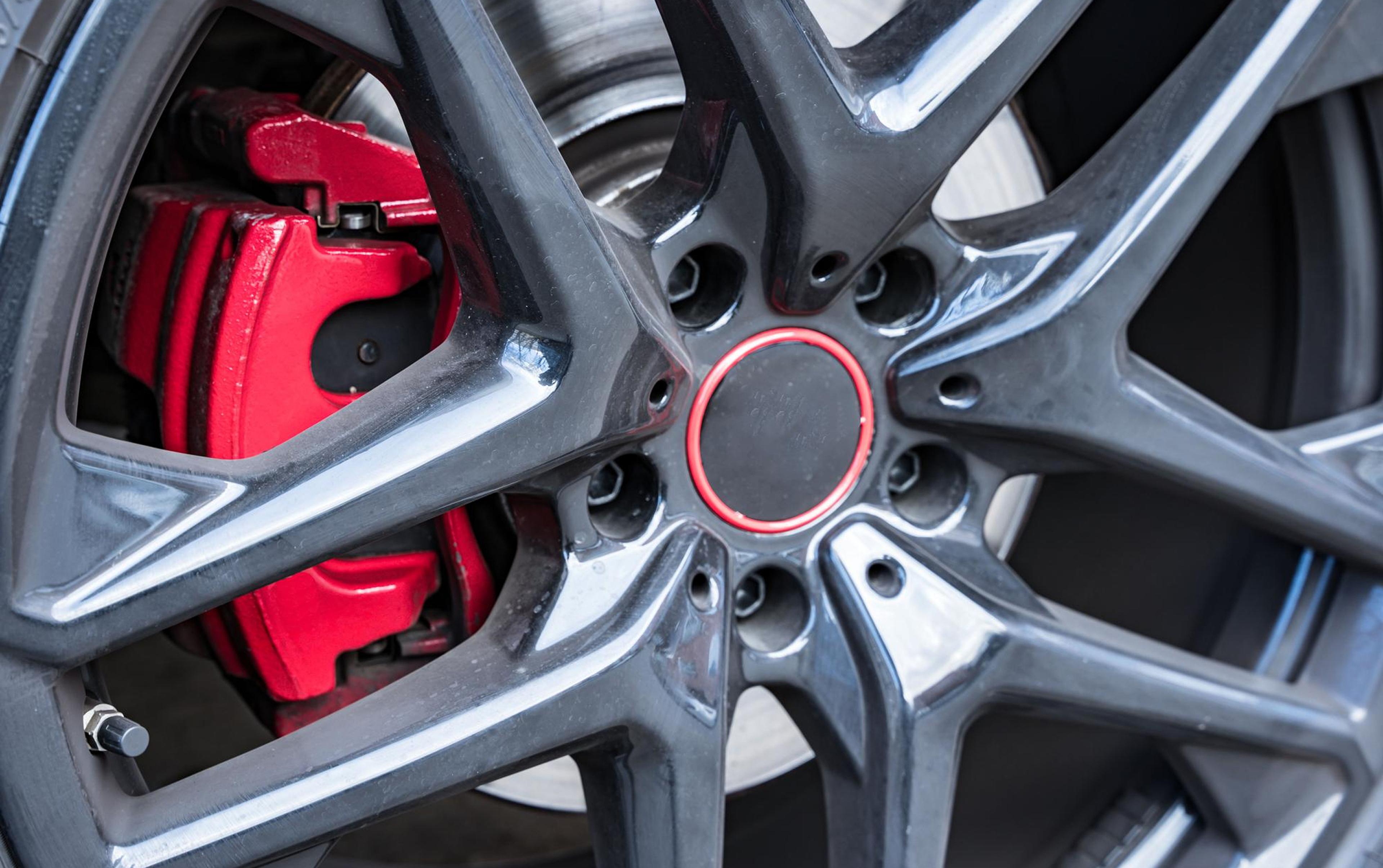
Brake calipers as a key component of modern disc brakes
Brake calipers are among the most important technical components of modern braking systems and are at the heart of every disc brake. They are responsible for precisely converting the hydraulic pressure from the braking system into mechanical braking force. It is only through the interaction of brake calipers, brake pistons, brake pads, and brake discs that controlled deceleration is achieved, bringing the vehicle to a safe stop.
Brake systems in today's vehicles are significantly more complex than in the past. In addition to pure deceleration, they must ensure consistent response, high thermal resistance, and stable pedal feel. Brake calipers play a key role in this, as they directly determine how evenly the braking force is applied to the disc brake. Even minor restrictions in the mobility of brake pistons or guide mechanisms can noticeably alter the braking effect and negatively influence driving behavior.
A closer look at the design, function, and typical loads on brake calipers shows why they are indispensable for the safety and reliability of modern brake systems and why their technical condition has a decisive influence on the performance of the entire brake system.
Structure of brake calipers

Brake caliper housing
The housing of modern brake calipers is much more than just a shell. It is a highly stressed structural component that absorbs all forces within the disc brake and transmits them precisely. Depending on the vehicle class, it is made of cast iron for maximum rigidity or aluminum alloys, which save weight and contribute to the efficiency of modern braking systems. During emergency braking, forces of several tons are generated in the brake system, which must be absorbed by the housing, while temperatures of over 300 °C occur at the same time. The housing must not deform, as even minimal distortion leads to uneven pad contact, increased noise, or fluctuating braking performance.
In addition, the caliper housing serves as a precise guide for the brake pads and ensures that they are symmetrical to the brake disc. It therefore directly influences the stability and reliability of the entire brake system.
Brake pistons
The brake piston is the heart of hydraulic brake systems. As soon as the driver presses the brake pedal, the brake system builds up high hydraulic pressure via the brake fluid, which pushes the piston forward. This transfers the force precisely to the brake pads, which in turn are pressed against the rotating brake disc.
The quality and surface finish of the piston have a significant impact on pedal feel. A cleanly guided brake piston enables finely controllable braking, while a dirty or corroded piston can lead to jerking, grinding, or uneven braking. High-quality brake calipers use polished steel pistons or coated aluminum pistons, which minimize thermal expansion and prevent corrosion. The diameter of the piston is also crucial. Large brake pistons generate high clamping forces, as required in powerful braking systems or sports cars.
The brake piston therefore determines not only the deceleration force, but also the response speed of the entire disc brake.
Seals and dust boots
The seal in the brake caliper not only ensures that the hydraulic pressure is maintained inside. It also has a return function. Thanks to its elastic shape, it pulls the brake piston back slightly after each braking operation, thus ensuring that the pads do not rub permanently against the brake disc.
Dust boots prevent the ingress of water, dirt, and road salt, all of which can cause severe damage to pistons and raceways. If the boot becomes brittle or tears, moisture can penetrate and cause corrosion. This often results in the brake piston sticking and the brake system working on one side only or generating heat continuously.
Precisely because brake calipers are often exposed to harsh environmental conditions, the condition of these sealing systems is considered crucial for the long-term functionality of the disc brake. Failures do not occur abruptly, but build up slowly, which is why regular maintenance is particularly important here.
Guide pins
Floating calipers are used in most vehicles. This design uses guide pins to allow the entire brake caliper to move sideways. This means that a single brake piston is sufficient to press both brake pads evenly against the brake disc, making it an efficient and cost-effective system.
The guide pins must be extremely smooth-running, as even slight corrosion can prevent the caliper from sliding freely. Typical consequences are:
- Uneven tread wear
- Squealing or delayed braking effect
- Overheating of one side of the brake disc
- Spongy or pulsating pedal feel
High-quality braking systems therefore rely on hard chrome-plated or coated guide pins and use heat-resistant lubricants that retain their consistency even under extreme temperature changes. Without a functioning guide mechanism, the braking system loses its symmetrical force distribution, a risk that is absolutely critical in modern braking systems.
Pad brackets
Brake pad retainers and spring plates ensure that the brake pads remain precisely in position and can move freely. They minimize vibrations, prevent rattling noises, and ensure that the pads slide back cleanly after each braking operation.
Clean, corrosion-free pad guidance is essential, as stuck brake pads quickly lead to overheating, permanent grinding, or fluctuating braking performance. Salt and moisture are a considerable burden, especially for vehicles that are frequently used in winter.
In high-performance braking systems, the brackets are made of heat-resistant stainless steel alloys that minimize distortion and corrosion. This means they actively help to ensure that brake calipers work precisely even under high thermal loads and deliver consistent braking performance.
Bleed screw
The bleed screw allows air to be removed from the hydraulic system. Even the smallest air bubbles impair pressure transmission, as air is compressible. Typical symptoms when there is air in the system:
- Soft brake pedal
- Delayed braking effect
- Longer braking distance
- Imprecise pedal feel
Correct bleeding restores full pressure stability to the hydraulic circuit, allowing the brake piston to work optimally.
Connection for the brake line
The connection for the brake line is the hydraulic interface between the master cylinder and the brake caliper. It must be completely leak-proof and vibration-resistant, as even the smallest leaks can lead to pressure loss and impair the entire brake system. Modern brake calipers use high-strength hollow screws, O-ring sealing surfaces, or conical connections that can safely withstand extreme pressure loads. Thermal influences are also relevant, as the brake line transports heated brake fluid directly to the brake piston. A correctly executed line interface is therefore crucial for ensuring that the disc brake responds quickly, precisely, and reliably.
Function of brake calipers in the brake system

Hydraulic power transmission in the brake system
Brake calipers form the central link between the hydraulic part of the brake systems and the mechanical braking effect on the disc brake. As soon as the driver presses the brake pedal, hydraulic pressure is built up in the brake system via the master cylinder. This pressure is transmitted directly to the brake calipers via the brake lines. Inside the brake caliper, the pressure acts on one or more brake pistons, which move outwards in a controlled manner. This movement presses the brake pads against the rotating brake disc with a defined force. It is only at this point that the actual deceleration occurs, converting kinetic energy into heat.
The precise functioning of the brake pistons is crucial here. They must absorb the pressure evenly and respond without delay so that the disc brake responds spontaneously and in a controllable manner. Even the smallest leaks, deposits, or signs of corrosion can impair power transmission.
Uniform braking effect on the disc brake
One of the most important tasks of the brake calipers is to distribute the braking force evenly across both sides of the brake disc. Depending on the design, this is achieved either by means of several opposing brake pistons or by a sliding movement of the caliper itself. The aim is for the brake pads to lie parallel to the brake disc and for friction to be generated evenly across the entire surface. Only in this way can the disc brake develop its full braking effect without causing vibrations, noise, or uneven wear.
If brake calipers are no longer able to move freely, for example due to dirty guides or stiff brake pistons, this results in uneven braking performance. In such cases, one pad is more worn than the other, which can lead to uneven abrasion, increased heat generation, and a longer braking distance.
Significance for driving experience
The condition of the brake calipers has a direct influence on the subjective driving experience and safety of modern vehicles. A cleanly operating brake caliper ensures a clearly defined pressure point, well-modulated deceleration, and a stable pedal feel. The driver can control the braking force precisely, which is particularly crucial in dangerous situations or during rapid braking maneuvers.
In addition, functioning brake calipers are a fundamental prerequisite for interaction with electronic braking systems such as ABS or ESP. These systems actively intervene in the braking system by regulating the brake pressure on individual wheels. For these control processes to function correctly, the brake pistons in the brake caliper must respond quickly and evenly at all times. Delays or mechanical blockages can prevent electronic braking systems from working optimally and impair driving stability.
Types of calipers in disc brake systems
Floating calipers
Floating calipers are among the most common designs in modern braking systems because they offer an excellent balance of performance, cost, and reliability. They work with one or two brake pistons located exclusively on one side of the brake disc. During braking, the piston presses the inner brake pad against the disc, while the entire caliper is "pulled" to the other side via its guide pins. This also presses the outer pad against the disc, a clever mechanical principle that combines high efficiency with low technical complexity.
The advantage of this design lies in its compact construction and ease of maintenance. Since floating calipers have fewer components than more complex high-performance calipers, they are lighter, cheaper to manufacture, and easier to maintain. In the brake systems of many small and mid-range vehicles, they deliver consistent braking performance as long as the guide pins run smoothly and do not rust. Problems usually only arise when these sliding points become dirty or the lubrication deteriorates – then the floating caliper can jam and the braking effect becomes uneven.
Nevertheless, floating calipers are considered extremely robust in practice. They are ideal for everyday driving situations, commuting, or longer journeys with moderate braking requirements. Their combination of performance, price, and weight makes them the standard equipment for many vehicle manufacturers worldwide.
Fixed calipers
Fixed calipers are technically more sophisticated and are considered the more powerful version of modern brake calipers. Unlike floating calipers, they do not move back and forth sideways, but are firmly connected to the steering knuckle. Instead of a single piston, fixed calipers have several brake pistons that are located symmetrically on both sides of the disc brake. These pistons press the brake pads onto the brake disc simultaneously and absolutely evenly, resulting in precise and stable braking.
This design offers significant advantages for vehicles that place high demands on their braking systems, such as sports cars, heavy SUVs, or powerful sedans. The even distribution of force ensures that the pads fit optimally, wear less unevenly, and remain reliable even at high temperatures. Due to their greater rigidity, fixed calipers respond more directly, which provides a significantly more controlled pedal feel, especially during rapid braking maneuvers or on demanding routes.
However, fixed calipers are more expensive to manufacture, heavier, and more costly to maintain. Their more complex design makes them more susceptible to corrosion on the pistons if maintenance intervals are neglected. Nevertheless, they offer clear advantages in performance-oriented braking systems: more consistent braking force, less thermal deformation, and superior controllability.
That is why fixed saddles are not only found in motorsports, but increasingly also in high-quality production vehicles whose drivers expect precise responsiveness and high endurance.
Wear and tear in everyday driving
Thermal stresses on brake calipers
Brake calipers are constantly exposed to extreme loads within the brake system. Every time the disc brake is applied, high temperatures are generated, which are transferred directly to the brake caliper and, in particular, to the brake piston. Temperatures of several hundred degrees are not unusual in the friction area. At the same time, strong mechanical forces are exerted, which are transferred to the brake disc and then to the caliper via the brake pads when the vehicle is braked.
In addition, there are environmental influences that place heavy demands on many brake systems: moisture, road dirt, and, above all, road salt attack metal surfaces and seals. The moving parts of the brake caliper are particularly sensitive to this. Corrosion on guide pins or on the surface of the brake piston can restrict the movement of components. This combination of heat, pressure, and external influences makes the brake caliper one of the most heavily stressed elements in the entire brake system.
Effects on braking performance
When brake calipers lose their mobility, this has a direct impact on the function of the disc brake. If a brake caliper no longer retracts completely, the brake pads remain in constant contact with the brake disc. This causes permanent friction, which leads to additional heat generation and accelerated wear. At the same time, the braking force is no longer built up evenly, which noticeably reduces the braking effect.
A stiff or stuck brake piston can also prevent the brake pressure from releasing properly or cause it to be distributed unevenly. This results in longer braking distances, an uneven pedal feel, or one-sided pulling when braking. Such defects usually develop gradually and go unnoticed for a long time in everyday use, but they significantly impair the performance of the entire brake system.
In the long term, a neglected brake caliper can not only damage the brake discs and pads, but also throw the entire brake system out of balance.
Typical defects in brake calipers
Stuck brake pistons as a common cause
A very common defect in brake calipers affects the brake pistons, which must move out of the caliper and back again each time the disc brake is applied. If moisture, dirt, or brake dust gets into the piston area, corrosion or deposits can form. The brake piston then no longer retracts completely, causing the brake pads to remain in permanent contact with the brake disc. This results in increased temperatures, rapid pad wear, and a noticeable reduction in braking performance.
Stiff guides and uneven braking force
Dirty or corroded guide pins are a typical problem, especially with floating calipers. If the brake caliper can no longer move freely, the braking force is not distributed evenly across both brake pads. In practice, this manifests itself in uneven wear, vibrations in the pedal, or the vehicle pulling to one side when braking. The disc brake then no longer works properly, which can negatively affect the control functions of modern braking systems such as ABS or ESP.
Leaks and structural damage to the brake caliper
Leaks in seals or damage to the brake caliper body are among the most safety-critical defects. If brake fluid leaks out, stable pressure can no longer be built up in the hydraulic brake system. This manifests itself in soft pedal travel, delayed response, or reduced overall braking performance. In addition, deformation of the brake caliper can cause the brake pads to no longer lie flat against the brake disc. In such cases, the disc brake loses its precise controllability.
Conclusion
Brake calipers are essential key components of every disc brake and play a decisive role in determining the performance of modern braking systems. They transfer the hydraulic pressure of the braking system precisely to the brake pads and ensure controlled, even braking. Their design, material quality, and mobility determine how reliably and safely a vehicle decelerates. Anyone who understands the importance of brake calipers will quickly realize why they are indispensable for functioning brake systems and have a direct influence on safety, driving experience, and braking performance.